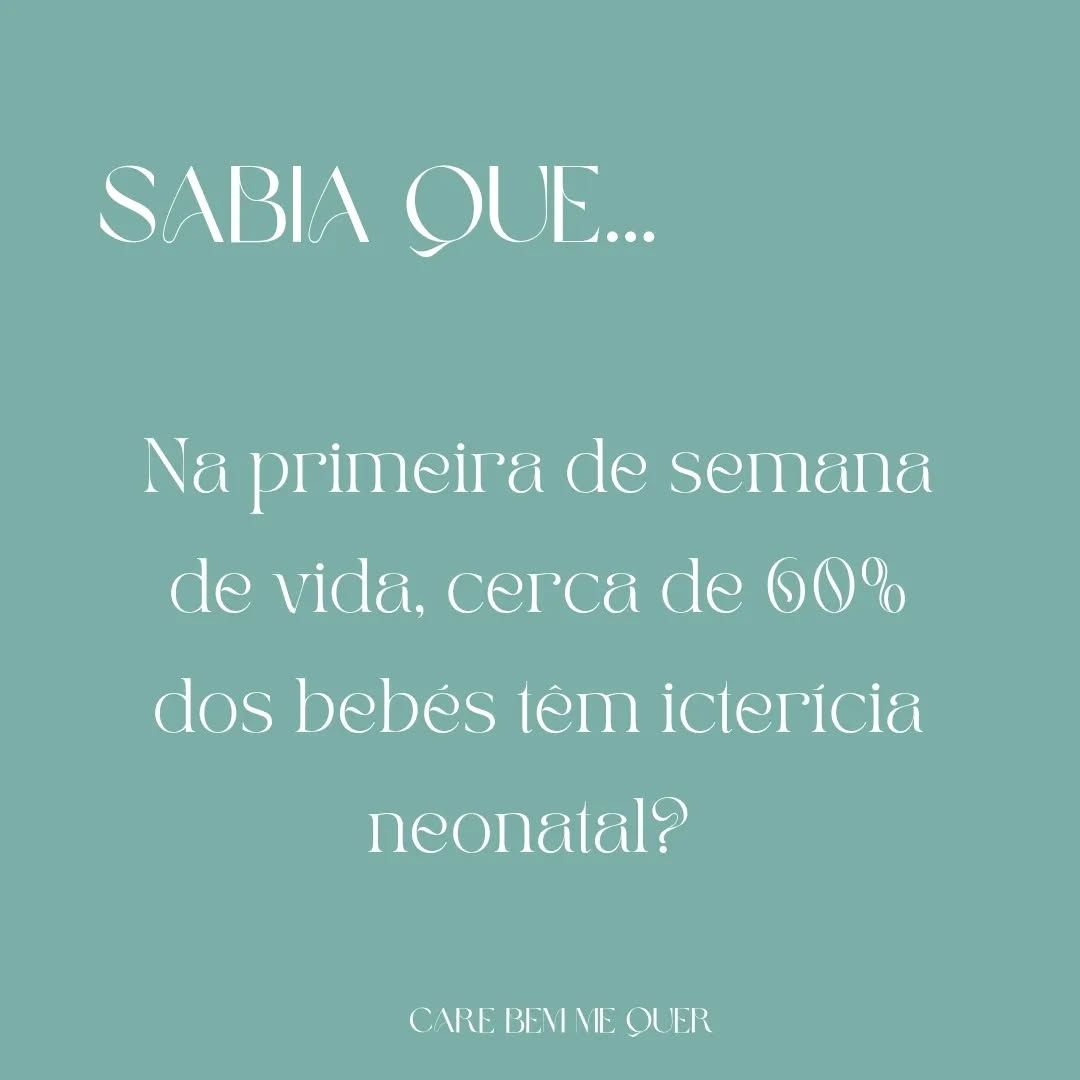
A icterícia é a coloração amarelada das escleróticas (parte branca do olho) e da pele. Habitualmente é devida à imaturidade fisiológica do recém-nascido, mas também pode significar doença, pelo que os pais devem sempre informar o pediatra do bebé.
Em termos genéricos, pode-se afirmar que a icterícia é tanto mais evidente quanto maior for o valor de bilirrubina, daí o termo hiperbilirrubinemia.
Sintomas:
◇ Coloração amarelada das escleróticas e pele
◇ Palidez das mucosas.
Tratamento:
◇Fototerapia
◇ Se não apresentarem valores muito altos, basta manter vigilância das mamadas e débito urinário e dejeções , pois a bilirrubina é eliminada através do sistema urinário e intestinal.
As crenças populares de tratar a icterícia colocando o bebé ao sol ou dar a beber água das pedras, não têm qualquer fundamento científico (Neto, 2023)
🇬🇧 Jaundice is the yellowing of the sclera (white part of the eye) and the skin. It is usually due to the physiological immaturity of the newborn, but it can also mean illness, so parents should always inform their baby's pediatrician.
In general terms, it can be said that jaundice is more obvious the higher the bilirubin level, hence the term hyperbilirubinemia.
Symptoms:
◇ Yellowish coloration of the sclerae and skin
◇ Pallor of the mucous membranes.
Treatment:
◇ Phototherapy
◇ If the values are not too high, it is enough to keep an eye on feeds and urine output and defecation, as bilirubin is eliminated through the urinary and intestinal systems.
Popular beliefs about treating jaundice by putting the baby in the sun or drinking water from stones have no scientific basis (Neto, 2023).
#carebemmequer #cascais #sintra #lisboa #loures #lourinhã #pediatria #enfermagempediatrica
 1 / 3
1 / 3